
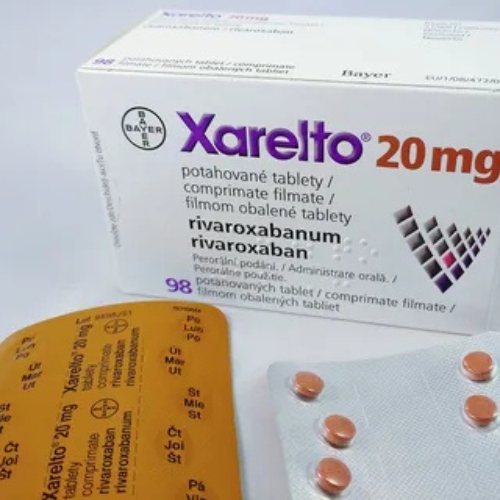
Description
What does Xarelto treat?
Doctors prescribe Xarelto for several blood clot-related conditions. Use depends on the patient’s medical history, age, and individual risk factors.
Common uses approved include
- Stroke prevention. Reduces the risk of stroke and some blood clots in people with nonvalvular atrial fibrillation.
- How it is used: Blood clots: It is used to treat deep vein thrombosis (DVT) and pulmonary embolism (PE).
- Prevents recurrent clots: Helps prevent DVT or PE from happening again after the first treatment.
- To prevent blood clots after surgery, some patients may be prescribed it after surgery to replace a hip or knee.
- Reduction of the risk of cardiovascular events. In some patients with coronary artery disease or peripheral artery disease, it may be advisable to reduce the risk of serious cardiovascular events.
But treatment depends on the particular condition. A doctor will decide whether Xarelto is an appropriate option.
How Xarelto Works?
Xarelto prevents blood from clotting by blocking a protein called Factor Xa. This protein is important in the process that allows blood clots to form.
The drug prevents the formation or growth of damaging clots by decreasing the activity of Factor Xa. Such medications can reduce the risk of some clot-related complications.
Rivaroxaban, unlike some older anticoagulants, does not normally require regular INR blood tests. However, doctors might still order blood tests to check kidney function, liver function, blood counts, and overall safety of the treatment.
Xarelto Advantages
When Xarelto is prescribed for the right medical condition, it can offer several potential benefits.
First, it helps to prevent and treat dangerous blood clots. This can be particularly important for those with atrial fibrillation, or a history of DVT or PE.
Second, because it is taken orally, patients can swallow the medicine instead of getting frequent injections for many treatment situations.
Most cases do not require routine INR monitoring, as it has a predictable anticoagulant effect. But patients still need to attend medical appointments and follow the treatment plan they have been given.
Most importantly, do not change your dose or stop taking Xarelto without speaking to your healthcare professional first.
Xarelto Potential Side Effects
XARELTO can cause side effects. The biggest risk is bleeding, because the medication decreases the blood’s ability to clot.
Possible side effects are
- Easily bruised.
- Nose bleeds
- Gums that bleed
- Heavy menstrual periods
- Bleeding that is harder to control than normal
There may be other symptoms in some patients who require medical evaluation.
Call a doctor or get emergency medical help if you have severe or uncontrolled bleeding, vomit blood, have black or bloody stools, have a severe headache, or have weakness or confusion that could be a sign of serious bleeding.
You can have some internal bleeding from a fall or head injury that doesn’t show any symptoms right away. Get medical advice immediately after a serious injury.
Safety Precautions of Importance
Before you start taking Xarelto, tell your doctor about your medical condition and all the medicines you take.
If you have certain kidney or liver problems, active bleeding, or certain heart conditions, your treatment plan may be different. Rivaroxaban should not be used as a replacement for an anticoagulant specifically recommended for patients with artificial heart valves.
When taken with Xarelto, certain medicines can increase the risk of bleeding. These include aspirin, nonsteroidal anti-inflammatory drugs (NSAIDs), other blood thinners, and some prescription medications. Some combinations may be prescribed deliberately, however, so do not stop any medication without professional advice.
Anticoagulant choices need special consideration in patients who are pregnant or planning pregnancy and should be discussed with their healthcare professional.
How to take Xarelto?
Take Xarelto exactly as your health care professional tells you. The correct dose (and whether you need to take it with food) depends on the condition being treated and the strength of the tablet.
Some strengths should be taken with food, and some may be taken with or without food. So check out the instructions that came with your prescription.
If you miss a dose, do what is instructed for your particular treatment schedule or call your pharmacist. Recommendations vary by dose and indication.
Never double a dose unless your healthcare professional specifically tells you to.
Xarelto Frequently Asked Questions (FAQs)
1. What is Xarelto used for?
Xarelto is used to prevent and treat blood clots. It can also reduce the risk of stroke in those eligible patients with nonvalvular atrial fibrillation.
2. Does Xarelto thin the blood?
Yes. Xarelto is an anticoagulant (also known as a blood thinner). It doesn’t actually thin the blood, but it does reduce the ability of blood to clot.
3. Do I need regular blood tests on Xarelto?
Routine INR monitoring is usually not required. However, doctors may ask for blood tests to assess the kidney and liver function and blood counts.
4. Can I stop taking Xarelto if I feel better?
No. Stopping Xarelto without medical advice may increase the risk of dangerous blood clots or stroke. Only discontinue treatment after consulting your healthcare professional.
5. Is Xarelto the right choice for all?
No. It is contingent upon the patient’s condition, medical history, kidney and liver function, and other medicines. Whether it is appropriate should be determined by a qualified health care professional.
Summary
Xarelto (rivaroxaban) is an anticoagulant used to help prevent and treat certain serious blood clot conditions. It offers several key benefits for eligible patients, such as decreasing the risk of stroke, DVT, and PE.
Isabella Johnson, Denver, CO –
I’ve been using Care Rx Direct for a while now, and I’m always impressed with the quality of service. Timely delivery and great communication.